PROCESS SELECTION
CNC turning or milling?
Start with the geometry, then consider the whole component. Many production parts combine turned features, milled features and finishing operations.
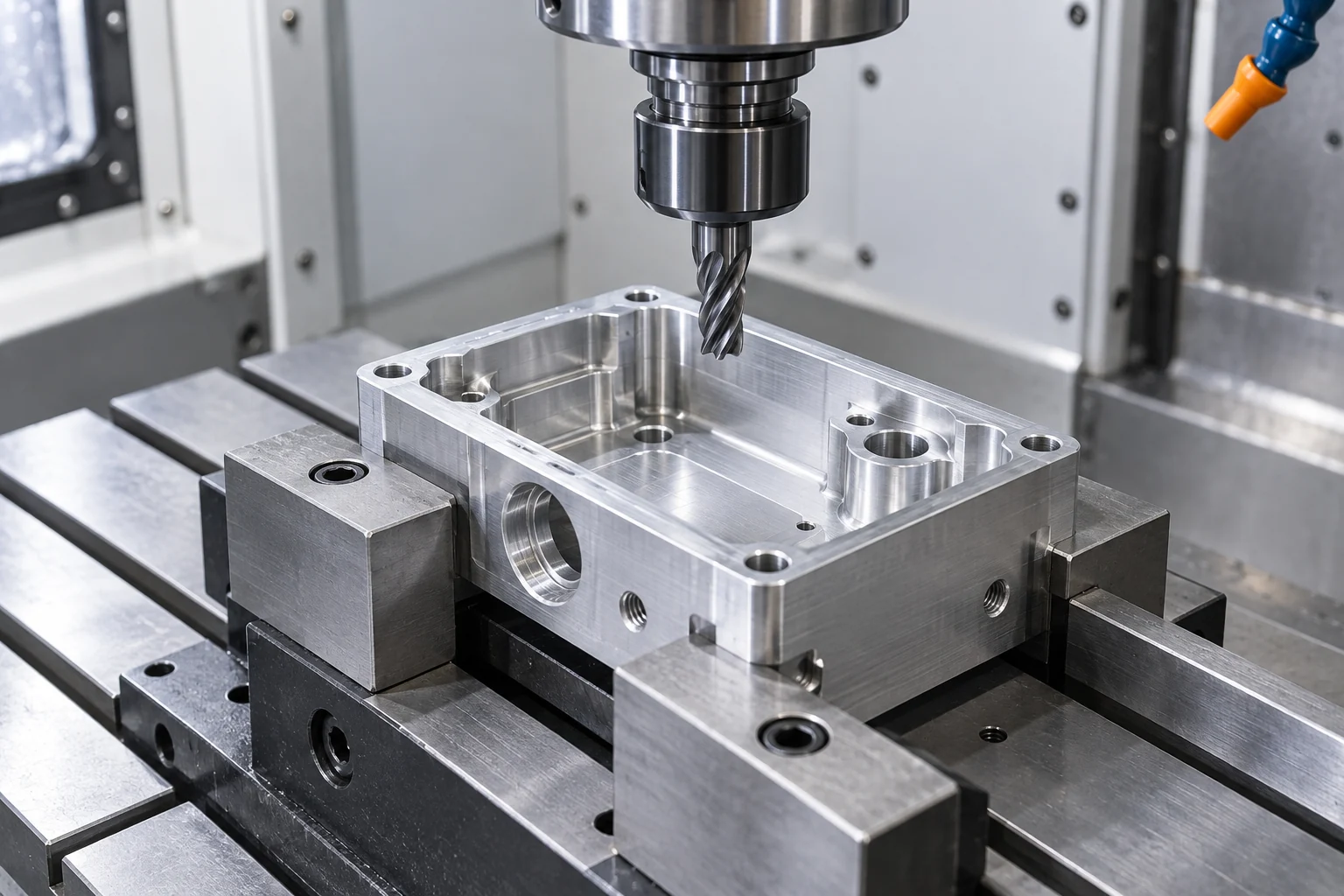
Start with the features.
In CNC turning, the workpiece normally rotates while a cutting tool feeds along it to remove material. In CNC milling, a rotating cutting tool removes material as the tool and workpiece move relative to each other. A component can require both processes.
| Consideration | Turning | Milling |
|---|---|---|
| Typical geometry | Diameters, shoulders and rotational profiles | Faces, pockets, slots and varied outer forms |
| Common parts | Shafts, sleeves, bushings and flanges | Housings, brackets, plates and blocks |
| Drawing priorities | Fits, threads and axial relationships | Datums, hole positions and mating faces |
Quote the complete component.
A turned shaft may also need a flat or cross-hole. A milled housing may include a bore with a critical fit. These features belong in the same scope review.
Send the complete drawing and model. Confirm secondary operations, edge conditions, treatment and inspection in the finished-part quotation.
Define the result that matters.
Identify locating surfaces, mating diameters, important hole positions and controlled cosmetic areas. Put the tolerances and datum references on the drawing.
If a particular process is itself a requirement, specify it. Proposed changes still need your engineering approval.
Compare on the same basis.
- Same drawing revision and material condition
- Same quantity and approval requirements
- Same finish, critical features and records
- Same destination and shipment assumptions
Bring the part set together.
There is no blanket rule that one process is always cheaper or faster. Geometry, quantity and the complete manufacturing scope determine the quote.
WhaleResolve can review turned and milled parts together, with one contact for requirements, progress and supply.